If you’ve ever been to a gym, you’ve likely seen the decline/abdominal bench machine—a core training staple. If you’re new to it, you may wonder: which muscles does it target? Is it just for abs, or other groups too?
Clarify the Machine (Decline vs. Abdominal Bench)
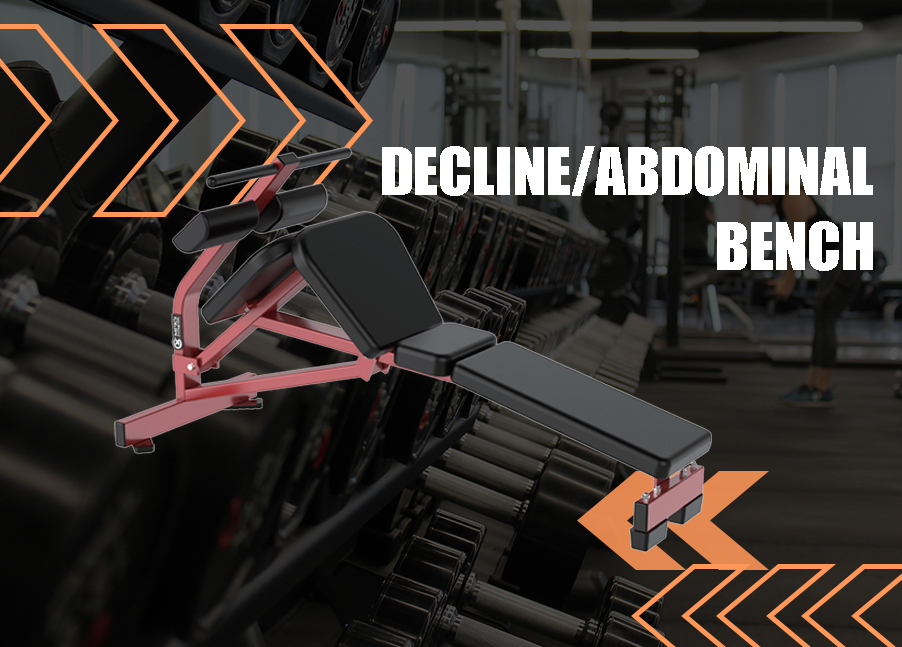
“Decline/abdominal bench machine” often refers to two related, sometimes adjustable, pieces of equipment:
-
Decline Bench: Tilts downward (15–45 degrees, head lower than hips), used for bench presses and ab exercises like decline crunches.
-
Abdominal Bench: Specialized for core work, adjustable to decline/flat/incline positions to target different ab areas.
We’ll focus on the decline position—the most effective for ab-focused workouts, as it maximizes muscle engagement.
Primary Muscles Worked
This machine is core-focused, with three primary muscles driving spine flexion (the key ab movement):
1. Rectus Abdominis (The “Six-Pack” Muscle)
The rectus abdominis runs vertically along the abdomen, creating the “six-pack” look when toned. On the decline bench, it’s maximally activated— the decline shifts your center of gravity, forcing it to work harder to curl your upper body, with more tension on the hard-to-target lower portion.
2. Obliques (Internal and External)
Obliques run along the abdomen’s sides, enabling lateral flexion and torso rotation. Exercises like decline side crunches engage them, and even standard decline crunches require obliques to stabilize your torso.
3. Transversus Abdominis (The “Corset” Muscle)
The deep transversus abdominis wraps the abdomen, critical for core stability and lower back protection. It braces your core during decline exercises, keeping your spine stable and preventing strain.
Secondary Muscles (Stabilizers and Assistors)
While the core is key, secondary muscles support movement and stability:
1. Hip Flexors (Iliopsoas and Rectus Femoris)
Hip flexors connect hips to lower back and thighs, assisting hip flexion in ab exercises. Avoid over-reliance (pulling with legs)—keep your lower back pressed to the bench to focus on abs.
2. Lower Back Muscles (Erector Spinae)
Erector spinae runs along the spine, opposing abs to stabilize the torso and prevent lower back hyperextension. It’s indirectly strengthened as a stabilizer.
3. Chest and Shoulders (Minor Stabilizers)
Placing hands behind your head/chest during crunches engages anterior deltoids and pectoralis minor to stabilize your upper body, though they’re not the focus.
Tips to Maximize Muscle Engagement
Follow these tips to target the right muscles effectively:
-
Proper Form: Keep your lower back pressed to the bench; avoid pulling your neck (rest hands lightly behind ears/chest).
-
Adjust Decline Angle: Steeper (30–45 degrees) targets lower abs; milder (15–20 degrees) suits beginners/lower back sensitivity.
-
Control Movement: Slow down—lower slowly (2–3 seconds) and curl up with control to increase time under tension.
-
Add Variations: Try decline side crunches, leg raises, or weighted crunches to engage more muscle fibers.
Common Mistakes to Avoid
Poor form reduces effectiveness and risks injury—avoid these mistakes:
-
Neck Pulling: Strains the neck; keep elbows out and hands light.
-
Arching Lower Back: Shifts stress to lower back/hip flexors; keep it pressed to the bench.
-
Momentum: Swinging reduces muscle engagement—control movement throughout.
Final Thoughts
The decline/abdominal bench is highly effective for full-core training, especially lower abs. It builds a stronger, more stable core, improving posture and reducing lower back pain.
Whether a beginner or seasoned gym-goer, it elevates core training—just prioritize form for results. Share your favorite exercises in the comments!


